
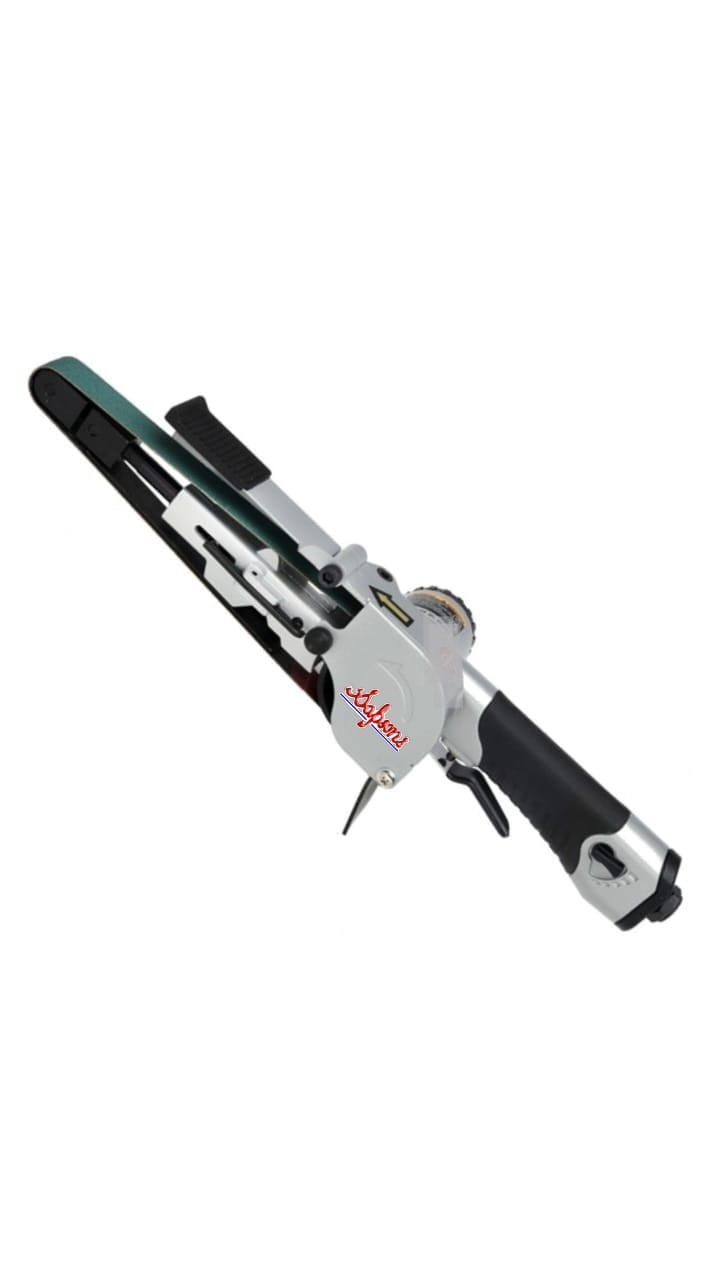
PNEUMATIC BELT SANDER
Description
A Pneumatic Belt Sander is a power tool that uses a loop of sandpaper on rotating drums to quickly smooth or shape wood, metal, or other surfaces. It comes in handheld or stationary types and is commonly used in woodworking and DIY projects. It's fast and powerful, ideal for large, flat areas, but requires careful handling for best results and safety.
Sapsons Pneumatic Belt Sander
The Belt Sander from SAPSONS is a pneumatic (air-powered) tool designed for fast surface finishing and material removal.
• It uses a continuous loop of abrasive sandpaper (belt) mounted on rotating drums.
• Powered by compressed air, making it suitable for industrial environments.
• Available in handheld form, allowing easy control and flexibility.
• Designed for high-speed sanding, shaping, and smoothing of surfaces.
Key Working Principle :
• Air pressure drives the motor
• Motor rotates rollers
• Sanding belt moves continuously
• Surface material is removed by abrasion
It is especially effective for large, flat surfaces and continuous finishing work
Applications
Sapsons pneumatic belt sanders are commonly used in:
• Woodworking (surface smoothing, leveling)
• Metal fabrication (deburring, polishing, weld finishing)
• Automotive repair
• Industrial manufacturing and maintenance
• DIY and workshop use
Key Features
• High speed & efficiency – removes material quickly
• Uniform finish – smooth and consistent surface results
• Air-powered operation – safer in continuous industrial use
• Lightweight & portable – easy handling
• Versatile use – works on wood, metal, plastic, etc.
Limitations
• Requires air compressor setup
• Needs careful handling to avoid over-sanding
• Not ideal for fine detail work
The Sapsons Pneumatic Belt Sander is a powerful industrial sanding tool that uses compressed air to drive a rotating abrasive belt. It is fast, efficient, and ideal for heavy-duty surface finishing, especially on large or flat areas. However, it requires proper handling and an air supply system for safe and effective use